
Commercial trailer parking is the designated storage or parking of semi-trailers, box trailers, flatbeds, and other commercial trailers when they are not actively being used. For truck drivers, owner-operators, and fleet managers, choosing between short-term and long-term parking can affect operating costs, security, convenience, and vehicle availability. The right commercial trailer parking solution depends on how long the trailer needs to stay, how frequently it will be accessed, and what level of security the operation requires.
What Is Short-Term Commercial Trailer Parking?
Short-term commercial trailer parking is designed for trailers that need a parking space for a few hours, days, or a limited period. It is particularly useful when drivers need somewhere to leave a trailer between deliveries, during route interruptions, or while waiting for the next assignment.
A short-term space can help prevent drivers from searching for suitable parking at the last minute. This is especially important when trailers cannot legally or safely remain on public streets, residential roads, customer properties, or areas with parking restrictions.
Short-term parking may be appropriate when:
- A trailer needs to be stored between scheduled loads.
- A driver has finished a delivery but has another pickup later.
- A fleet experiences temporary increases in trailer volume.
- A trailer needs to remain near a distribution area for quick access.
- A vehicle is temporarily out of service but does not require extended storage.
The biggest advantage is flexibility. Businesses do not necessarily need to commit to a dedicated space for months when their parking requirements change frequently.
However, short-term parking can become inefficient if a trailer repeatedly occupies spaces for extended periods. Frequent parking changes can also make it harder for fleet managers to maintain consistent trailer locations.
When Does Long-Term Commercial Trailer Parking Make More Sense?
Long-term commercial trailer parking is generally better when a trailer will remain in one location for weeks or months. It provides a predictable place to store equipment that is not needed every day.
For fleet operators, long-term parking can be useful for spare trailers, seasonal equipment, inactive units, or trailers waiting for maintenance. Keeping these assets in an organized location can also reduce congestion at loading facilities and business properties.
Long-term parking may make sense when:
- The trailer is rarely used.
A dedicated storage location keeps infrequently used equipment from occupying operational space. - The fleet has seasonal demand.
Additional trailers can be stored until demand increases. - The business lacks sufficient onsite space.
A separate parking facility can reduce pressure on a company’s property. - A trailer is awaiting repair or maintenance.
Storing it away from active loading areas can keep the yard more organized. - The trailer needs a consistent home base.
A permanent parking arrangement makes it easier for drivers and managers to locate equipment.
The primary benefit of long-term commercial trailer parking is predictability. Instead of repeatedly finding temporary spaces, fleet managers can establish a consistent storage strategy.
How Do Short-Term and Long-Term Trailer Parking Compare?
The best option depends on how often the trailer moves and how long it needs to remain parked. Neither short-term nor long-term parking is automatically better for every trucking operation.
| Factor | Short-Term Parking | Long-Term Parking |
| Typical use | Hours to several days | Weeks to months |
| Flexibility | High | Lower |
| Best for | Active operations and temporary needs | Storage and inactive equipment |
| Access | Frequent or immediate | Less frequent |
| Planning | More reactive | More predictable |
| Ideal users | Drivers and smaller fleets | Fleet owners and larger operations |
Short-term parking prioritizes flexibility, while long-term parking prioritizes stability and predictable storage.
For example, an owner-operator completing a delivery on Friday and collecting another load on Monday may need only a temporary parking space. A fleet with several unused trailers during an off-season may benefit more from a longer-term arrangement.
The decision should also account for the total cost of parking. A lower daily rate does not necessarily mean lower overall expenses if a trailer remains parked for a long period.
What Should You Consider Before Choosing Commercial Trailer Parking?
The most important factors are parking duration, accessibility, security, space requirements, location, and total cost. Evaluating these factors before choosing a facility can prevent operational problems later.
1. Parking Duration
Estimate how long each trailer will actually remain parked. Review historical usage if you manage a fleet, rather than relying only on assumptions.
If parking needs vary significantly, flexible short-term arrangements may be preferable. Consistent, extended parking requirements can make long-term arrangements easier to manage.
2. Location and Route Access
Location affects both convenience and operating costs. A parking facility that is far from major routes may create additional deadhead miles, which occur when a commercial vehicle travels without a revenue-generating load.
Consider proximity to:
- Major highways
- Distribution centers
- Customer facilities
- Freight terminals
- Fuel stations
- Maintenance providers
A strategically located commercial trailer parking facility can reduce unnecessary travel and make dispatch planning easier.
3. Space and Maneuverability
Trailers require substantially more room than ordinary passenger vehicles. Parking areas should provide adequate clearance for entering, exiting, turning, and positioning the trailer.
Fleet operators should consider the dimensions and configuration of their equipment. Standard dry vans, refrigerated trailers, flatbeds, and specialized trailers may have different parking and maneuvering requirements.
4. Security
Security becomes increasingly important when equipment remains unattended. Features such as controlled access, perimeter fencing, lighting, surveillance cameras, and clearly defined parking areas can help reduce risks.
No parking facility can eliminate every security threat, so businesses should also follow internal procedures for securing trailers and documenting where equipment is parked.
5. Total Cost
Look beyond the advertised parking rate. Consider additional expenses such as access fees, transportation to and from the facility, administrative charges, or costs associated with moving trailers between locations.
A useful comparison is:
Total parking cost = parking fees + access-related costs + additional operating costs
This gives fleet managers a more realistic basis for comparing parking options.
How Can Fleet Owners Build a Better Trailer Parking Strategy?
A good parking strategy starts by separating trailers according to their operational needs. Instead of treating every trailer the same, classify equipment based on how frequently it moves and how long it typically remains parked.
A practical process is:
- Inventory your trailers.
Record trailer type, size, location, and operational status. - Analyze parking duration.
Identify which units typically need parking for hours, days, weeks, or months. - Separate active and inactive equipment.
Frequently used trailers should be positioned for convenient access, while inactive units can use longer-term storage. - Map important routes.
Identify highways, customers, terminals, and facilities that influence trailer movements. - Compare parking costs.
Evaluate the complete operating cost rather than looking only at the posted parking rate. - Create clear parking procedures.
Make sure drivers know where trailers should be parked, how they should be positioned, and how locations should be recorded.
This approach turns commercial trailer parking from an occasional logistical problem into a manageable part of fleet operations.
FAQs
The permitted duration depends on the facility’s rules and the applicable local regulations. Some locations specialize in short-term parking, while others offer arrangements intended for extended trailer storage.
It can be, particularly when a trailer remains parked for an extended period, but pricing varies by facility. Businesses should compare the total cost and contract terms rather than assuming long-term parking is always less expensive.
A commercial trailer should be parked in a location that legally permits commercial vehicles and provides sufficient space for the trailer. Drivers should also consider access, security, lighting, and proximity to their next destination.
Trailer parking generally refers to keeping a trailer in a designated parking space, often with relatively convenient access. Trailer storage can imply longer-term retention of equipment that is not being actively used.
Location affects driver convenience, fuel consumption, deadhead miles, and response times. A parking location near major transportation routes or important freight facilities can make trailer management more efficient.
Conclusion
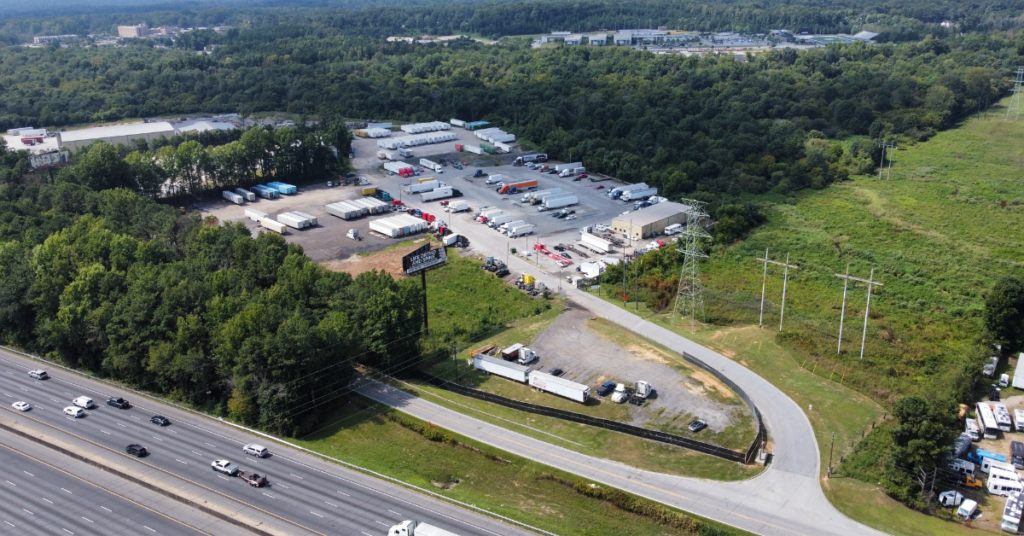
Choosing between short-term and long-term commercial trailer parking depends on how often a trailer moves, how long it stays parked, and how easily it needs to be accessed. By considering parking duration, location, maneuvering space, security, and total operating costs, drivers and fleet managers can choose a solution that better fits their operations. If you need a convenient and reliable place to park your commercial trailer, contact Atlanta Truck Parking LLC to learn more about our parking options.