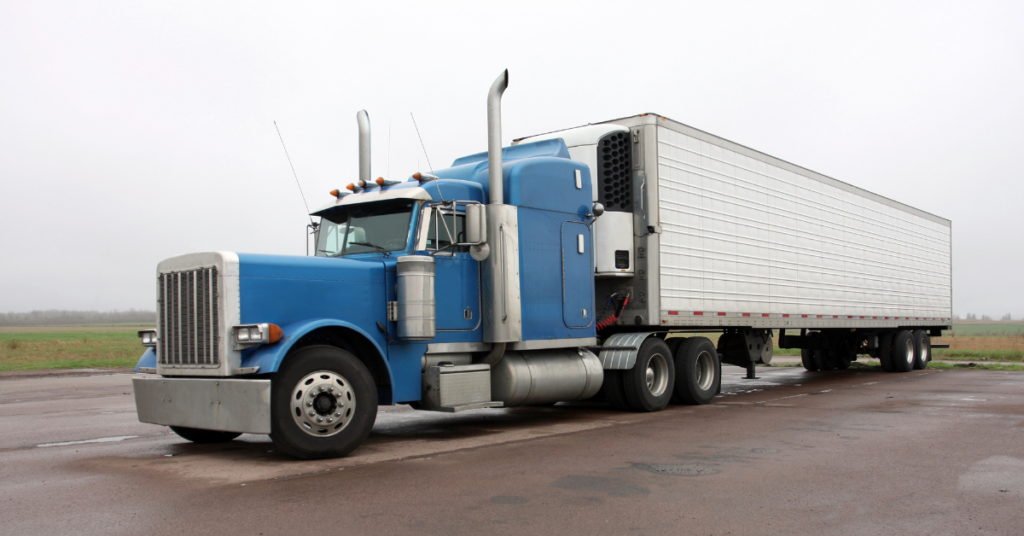
Big truck parking is designed for commercial vehicles that require more space, clearance, and maneuvering room than passenger vehicles. For a truck driver, choosing the right parking area is not simply about finding an open spot. Vehicle length, turning radius, trailer movement, surface conditions, and safe entry and exit all affect whether a location is suitable. Understanding how big truck parking differs from regular parking can help drivers make safer and more practical parking decisions.
Why Big Truck Parking Needs More Room
Big truck parking requires more space because commercial trucks are longer, wider, and less maneuverable than typical passenger vehicles. A parking space that works for a car, pickup, or SUV may provide nowhere near the room required for a tractor-trailer.
A standard passenger vehicle usually occupies a single parking space and can enter or leave with relatively little maneuvering. Large commercial vehicles may include a tractor and a 53-foot trailer, creating a combination that can reach roughly 70 feet or more in total length.
However, the parking stall itself is only part of the space requirement. Drivers also need room around the parking area to position the truck correctly.
Adequate big truck parking should account for:
- Tractor and trailer length
- Vehicle width
- Space between parked trucks
- Trailer swing during turns
- Room for backing maneuvers
- Safe entry and exit paths
- Clearance from curbs, poles, fences, and structures
This is one reason truck drivers should evaluate the entire parking area rather than focusing only on an empty space.
A spot might appear large enough from the road but still be difficult to use if the approach lane is narrow. Nearby vehicles, concrete barriers, or poorly positioned entrances can make parking challenging even when the actual stall is long enough.
Turning Radius and Maneuvering Differences
Large trucks need significantly more maneuvering room because their turning movements involve both the tractor and trailer. The trailer follows a different path from the tractor, which can create off-tracking and trailer swing.
Off-tracking occurs when the rear wheels follow a tighter path than the front wheels during a turn. This means a driver must consider objects beside and inside the turning path, not just what is directly ahead.
Backing also requires more planning in big truck parking areas.
A truck driver may need to:
- Approach the parking area at the correct angle.
- Position the tractor to create enough room for the trailer.
- Check mirrors and surroundings before backing.
- Make controlled steering adjustments.
- Use a spotter when available and appropriate.
- Get out and look if clearance is uncertain.
- Straighten the truck and verify its final position.
Trying to perform the same maneuver in a standard parking lot can be difficult because the aisles were usually designed for passenger vehicles.
Experienced drivers also know that an empty parking space does not automatically mean it is accessible. The amount of maneuvering room in front of the space can be just as important as its dimensions.
Clearance Challenges
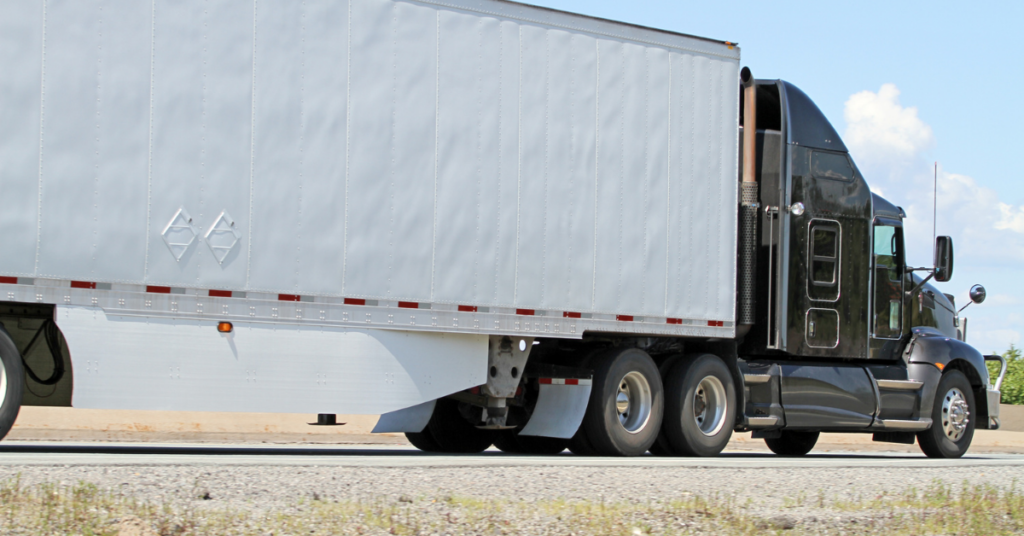
Trailer clearance is a major difference between big truck parking and regular parking because trailers introduce additional height, length, and swing considerations.
Truck drivers must pay attention to both horizontal and vertical clearance. A large parking area may look suitable at ground level while still having overhead hazards that make it unsafe for certain commercial vehicles.
Potential clearance hazards include:
- Low tree branches
- Building overhangs
- Utility lines
- Signs and signposts
- Light fixtures
- Fences and gates
- Curbs and concrete barriers
- Nearby parked trailers
Drivers should also consider how the trailer moves while turning and backing. The rear of a trailer can swing outward as the tractor changes direction, creating a risk of contact with another vehicle or fixed object.
When assessing big truck parking, look beyond the dimensions of the parking space. Consider the entire route from the entrance to the stall and from the stall back to the exit.
This is especially important in unfamiliar areas. A parking lot may have a wide entrance but become much tighter once a truck is inside.
When clearance is uncertain, stopping to inspect the area is safer than relying on assumptions.
Why Standard Parking Lots Are Often Unsuitable
Standard parking lots are generally designed around passenger vehicle dimensions, not the operating requirements of large commercial trucks. Their parking stalls, drive aisles, corners, entrances, and exits may be too restrictive for a tractor-trailer.
For example, a shopping center may have a large open parking lot, but that does not necessarily make it appropriate for truck parking. Landscaped islands, curbs, light poles, shopping cart areas, and narrow turning lanes can limit maneuverability.
There may also be restrictions on commercial vehicle parking. Property owners and local jurisdictions can have rules governing where large trucks may stop or remain parked.
Before using an unfamiliar parking area, drivers should consider:
- Is commercial truck parking permitted?
- Can the truck enter without crossing curbs or restricted areas?
- Is there enough space to turn around?
- Can the vehicle leave if other spaces become occupied?
- Are there posted height, weight, or parking restrictions?
- Is the ground suitable for the vehicle’s weight?
- Will the truck block normal traffic or emergency access?
Truck drivers should never assume that a large empty area is automatically available for truck parking.
Checking signs and property rules can help prevent situations where a driver must move unexpectedly after already stopping.
How Purpose-Built Lots Make Maneuvering Easier
Purpose-built big truck parking areas are designed around the dimensions and movement patterns of commercial vehicles. They typically provide larger spaces, wider travel lanes, and layouts that make entering, backing, and exiting more manageable.
The biggest advantage is not simply a larger parking stall. It is the combination of space, access, and layout.
A well-designed truck parking area may include:
- Wider entrances and exits
- Larger parking spaces
- Broader maneuvering lanes
- Fewer unnecessary obstacles
- Adequate trailer clearance
- Surfaces suitable for heavy vehicles
- Clearly defined traffic patterns
- Space for tractor-trailer combinations
These features reduce the need to force a large vehicle through an environment designed primarily for cars.
For truck drivers, this becomes particularly important after a long driving period. Parking still requires concentration, judgment, and awareness. A layout designed for commercial vehicles can make the process more predictable.
What Should Truck Drivers Look for Before Parking?
Before committing to a parking location, evaluate whether the entire site can safely accommodate your vehicle.
A quick big truck parking assessment should include these five steps:
- Check access. Confirm that the entrance is wide enough and does not have obvious restrictions.
- Inspect available space. Make sure the stall can accommodate both the tractor and trailer.
- Evaluate maneuvering room. Look at the space available for turning, backing, and repositioning.
- Identify hazards. Check for poles, curbs, fences, low structures, pedestrians, and other vehicles.
- Plan your exit. Consider whether you can leave safely if the surrounding spaces fill up.
Planning the exit before parking is particularly useful. A space that is easy to enter when a lot is empty may become difficult to leave several hours later.
Frequently Asked Questions
Big truck parking is parking designed or suitable for large commercial vehicles such as semi-trucks, tractor-trailers, and other heavy vehicles. These areas provide more space and maneuvering room than standard passenger vehicle parking.
The amount of space depends on the truck and trailer configuration. A tractor with a 53-foot trailer can have an overall combination length around 70 feet or more, and additional room is needed for turning and backing.
Sometimes, but only when the property allows commercial truck parking and the site can safely accommodate the vehicle. Many regular parking lots have narrow lanes, tight corners, obstacles, or restrictions that make them unsuitable for large trucks.
Turning space allows the tractor and trailer to move through the parking area without contacting vehicles, curbs, poles, or other obstacles. Large trucks also experience off-tracking, meaning the rear wheels may follow a tighter path during turns.
Check whether truck parking is permitted, then evaluate space, access, clearance, maneuvering room, surface conditions, and exit options. Drivers should also look for posted restrictions and potential hazards before entering.
Conclusion
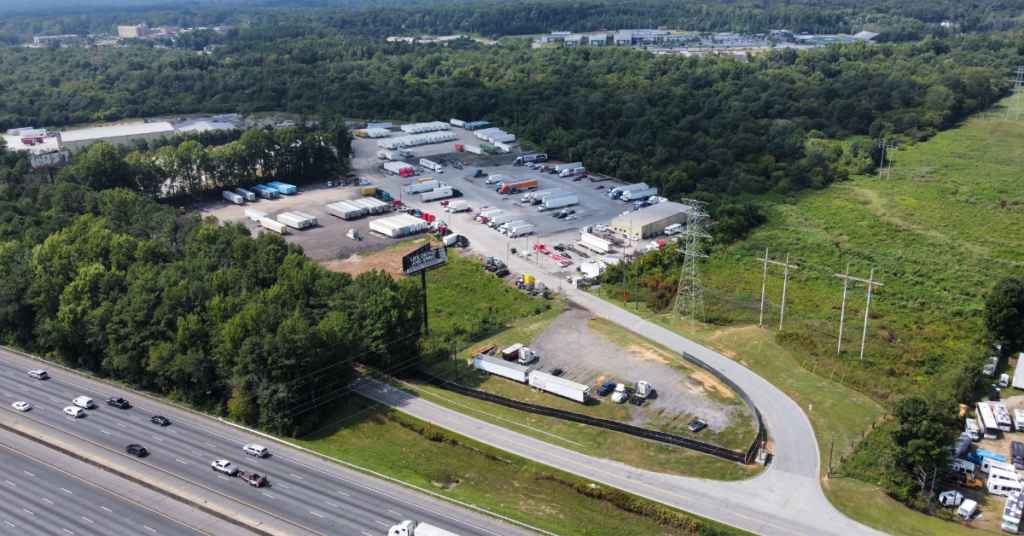
Big truck parking differs from regular parking because commercial trucks require more length, turning space, clearance, and maneuvering room. For a truck driver, evaluating the entire parking environment can be just as important as finding an open stall. Learning to recognize suitable parking layouts can make daily route planning and parking decisions safer and more efficient. If your route takes you through Metro Atlanta, Atlanta Truck Parking LLC offers a secure and spacious parking option for commercial trucks. You can also explore our other truck parking resources for more planning tips.