
Finding the right semi truck parking space is about more than finding an open spot large enough for a tractor and trailer. Truck drivers need parking that provides enough maneuvering room, convenient road access, suitable ground conditions, and reasonable security. These factors become even more important when parking overnight or leaving equipment for an extended period. Knowing what to look for can help drivers choose parking locations that are practical, accessible, and appropriate for their trucks.
Easy Highway Access and Convenient Location
A good semi truck parking space should be easy to reach from major trucking routes without requiring unnecessary detours. Location matters because extra miles spent searching for parking can consume driving time, fuel, and available Hours of Service.
For truck drivers, convenient parking often means being reasonably close to interstates, highways, distribution centers, industrial areas, or common freight corridors.
When evaluating the location, consider:
- Distance from your planned route
- Access to major highways and interstates
- Road restrictions for commercial vehicles
- Entrance and exit accessibility
- Nearby fuel, food, repair, or rest facilities
- Traffic conditions during arrival and departure
Drivers should also consider the roads immediately surrounding the parking facility. A parking lot may look convenient on a map but become difficult to access if nearby roads have weight restrictions, low clearances, narrow turns, or heavy local traffic.
A strategically located semi truck parking space can reduce unnecessary driving while making it easier to continue a route after a rest period or overnight stop.
Features of a Well-Designed Semi Truck Parking Space
A well-designed semi truck parking space provides enough room for the entire vehicle while allowing drivers to enter, maneuver, park, and leave safely.
A typical tractor-trailer can be significantly longer than a standard passenger vehicle, so truck parking requires much more than an oversized car parking spot. Drivers also need sufficient aisle width and turning space to position their equipment.
Useful design features include:
- Clearly marked parking spaces
- Wide driving aisles
- Adequate turning radius
- Organized traffic flow
- Separate entrance and exit points when possible
- Enough clearance between parked trucks
- Space for tractors with full-size trailers
Turning radius refers to the amount of space a vehicle needs to complete a turn. Because semi trucks have long wheelbases and trailers that track differently from tractors, tight corners can make even a large parking area difficult to navigate.
Drivers should look beyond the dimensions of an individual parking spot. The surrounding layout is equally important.
For example, a large semi truck parking space may still be difficult to use when the aisle in front of it is too narrow for proper backing. Good parking design considers the entire movement of a tractor-trailer, not just where it eventually stops.
Why Surface Conditions Matter for Heavy Trucks
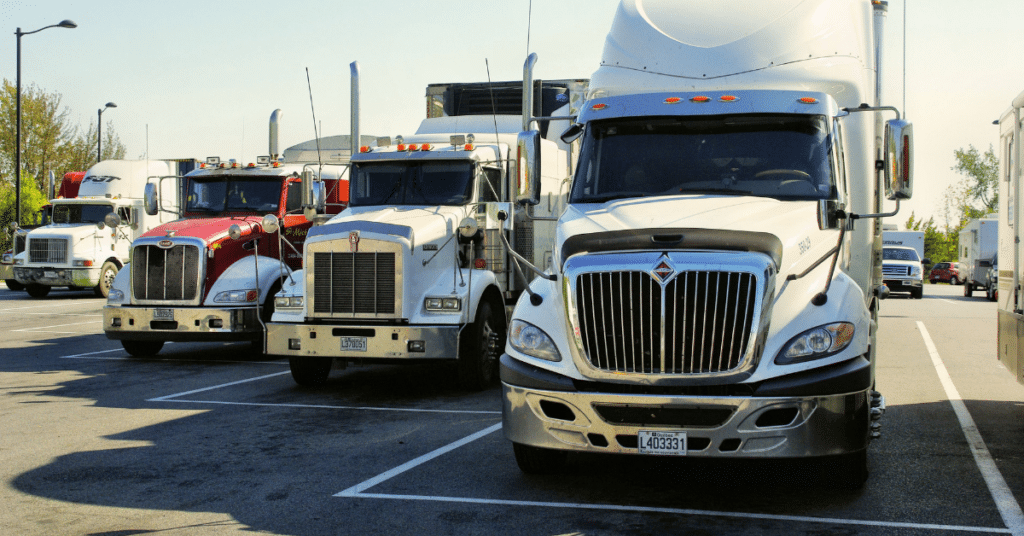
The surface of a semi truck parking area needs to support heavy commercial vehicles under different weather conditions.
A fully loaded tractor-trailer can place substantial weight on the parking surface. Soft soil, deep mud, large potholes, or unstable gravel can create problems that would barely affect a passenger vehicle.
Drivers should check for:
- Large potholes or deep ruts
- Standing water
- Mud or unusually soft ground
- Loose or unstable gravel
- Steep slopes
- Drainage problems
- Debris that could damage tires
A level and stable semi truck parking space also makes it easier to position the truck correctly. Surface quality becomes especially important after heavy rain, when poorly drained areas can become muddy or difficult for heavy vehicles to navigate.
Before entering an unfamiliar parking area, drivers should slow down and visually inspect the surface whenever practical. Pay particular attention to low areas, standing water, and damaged pavement.
Good drainage is another useful indicator. Parking areas designed for heavy vehicles should move water away from travel lanes and parking spaces instead of allowing large pools to develop.
Security Features Drivers Should Look For
Security is an important consideration when choosing where to park a tractor, trailer, or cargo. While no parking facility can eliminate every risk, several features can help create a more controlled parking environment.
Truck drivers should consider whether a parking location provides:
- Perimeter fencing: A defined perimeter can help control unauthorized access.
- Controlled entry: Gates, access codes, attendants, or similar systems can limit who enters the property.
- Adequate lighting: Good nighttime visibility helps drivers navigate the property and makes activity around vehicles easier to see.
- Security cameras: Video surveillance can provide additional monitoring of entrances, exits, and parking areas.
- On-site personnel: Staff or security personnel can provide another layer of oversight where available.
Drivers should evaluate these features together rather than relying on one security measure alone.
For example, cameras can be useful, but adequate lighting and controlled access may make the overall parking environment more effective. Similarly, a fenced property is more useful when entrances and exits are properly managed.
Before selecting a semi truck parking space for overnight or extended parking, drivers can also check recent reviews and available facility information. This may reveal recurring concerns involving access, lighting, lot conditions, or security.
Drivers remain responsible for securing their own equipment. Locking the tractor and trailer, protecting valuables, and following company cargo-security procedures remain important regardless of where the vehicle is parked.
How to Compare Semi Truck Parking Space Options
The best semi truck parking space depends on the driver’s route, equipment, parking duration, and priorities. Instead of choosing based on a single feature, compare several practical factors before making a decision.
A simple comparison process can make this easier.
Step 1: Check the location.
Determine how far the parking area is from your current route and how easily you can return to the highway.
Step 2: Confirm vehicle compatibility.
Make sure the property accepts your equipment type, especially if you have a tractor-trailer, trailer only, box truck, RV, or oversized vehicle.
Step 3: Evaluate maneuvering space.
Look for enough room to turn, back in, pull forward, and leave without unnecessary difficulty.
Step 4: Review the surface.
Consider pavement quality, drainage, potholes, mud, and other conditions that could affect heavy trucks.
Step 5: Compare security features.
Check for lighting, fencing, cameras, controlled access, and on-site personnel.
Step 6: Understand parking rules and availability.
Confirm whether the space is intended for daily, overnight, weekly, or monthly parking. Ask about access hours and any restrictions that could affect your schedule.
Price can also be part of the decision, but the lowest-priced option is not automatically the most practical. A cheaper location that requires a long detour or creates access problems may cost more in time and fuel.
For many truck drivers, the right semi truck parking space offers a practical balance of location, accessibility, maneuvering room, surface quality, security, and cost.
FAQ
The required space depends on the tractor and trailer configuration. A standard tractor with a 53-foot trailer needs significantly more room than the parking stall alone because the driver also needs adequate space for turning and backing.
Look for convenient highway access, enough maneuvering room, a stable parking surface, adequate lighting, and appropriate security measures. You should also confirm that the facility accepts your vehicle type and parking duration.
Fencing can help create a more controlled parking environment, especially when combined with gated access, lighting, cameras, or on-site personnel. However, drivers should still secure their vehicles and follow normal cargo and equipment security procedures.
Overnight parking depends on the rules of the property or parking facility. Always confirm that overnight commercial vehicle parking is permitted rather than assuming an available space can be used overnight.
Research parking locations along your route before departure and identify primary and backup options. Check accessibility, operating rules, vehicle restrictions, recent reviews, and proximity to major highways before relying on a location.
Choosing the Right Semi Truck Parking Space
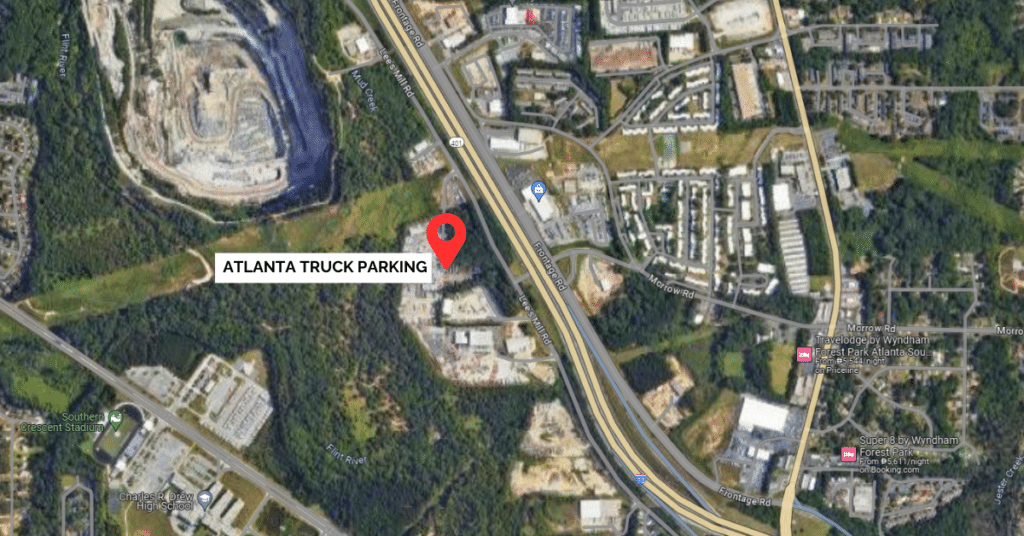
A good semi truck parking space should provide more than enough room to stop a truck. Location, maneuverability, surface conditions, security, and accessibility all affect how practical a parking option will be for truck drivers. Before your next route, compare these factors and research parking options ahead of time so you have a reliable place to park when you need it. If you’re traveling through the Atlanta area, Atlanta Truck Parking LLC is one of the options to consider for secure and convenient truck parking.