

Finding a reliable truck parking yard is an important part of trip planning for truck drivers, owner-operators, and fleet drivers. A good parking yard provides more than an open space to leave a truck or trailer. Location, accessibility, security, layout, and daily operations can all affect how safely and efficiently drivers park. Knowing what to look for can help drivers avoid wasted time, difficult entrances, and unnecessary parking problems.
Location and Highway Access Matter
A good truck parking yard should be located where drivers can reach it without adding unnecessary miles to their route. For commercial drivers, even a short detour can consume fuel, driving time, and available Hours of Service.
Highway access is especially important. A conveniently located yard near major interstates, freight corridors, warehouses, distribution centers, or industrial areas can make arrival and departure easier.
Before choosing a parking location, drivers should consider:
- Distance from their planned route
- Access to major highways and interstates
- Road restrictions for commercial vehicles
- Nearby low bridges or weight restrictions
- Traffic conditions around the property
- Accessibility for trucks with trailers
Drivers should also look beyond the distance shown on a map. A truck parking yard may appear close to a highway but require several miles of local driving to reach its entrance.
Checking the actual route before arrival can help identify narrow roads, restricted streets, difficult turns, and other obstacles.
Space and Layout of a Truck Parking Yard
A well-designed truck parking yard should provide enough room for commercial vehicles to enter, maneuver, park, and leave safely.
Space is particularly important for tractor-trailers. A parking space may technically fit the vehicle, but that does not necessarily mean the surrounding area provides enough room for backing and turning.
Drivers should evaluate several aspects of the yard’s layout:
- Width and length of parking spaces
- Driving lane width
- Turning and backing space
- Surface condition
- Clearly identified parking areas
- Separation between parked vehicles and traffic lanes
The condition of the parking surface also matters. Large potholes, deep mud, standing water, and uneven surfaces can make maneuvering more difficult.
Weather should also be considered. Heavy rain can change the condition of an unpaved lot, while poor drainage may create standing water in parking or driving areas.
For drivers arriving after dark, a straightforward layout can be especially useful. Clearly marked areas and sufficient maneuvering space reduce unnecessary backing adjustments and confusion.
Security Measures Drivers Should Expect

Security is one of the most important considerations when evaluating a truck parking facility. Trucks, trailers, equipment, and cargo can represent significant financial value, so drivers should understand what security measures are available before leaving a vehicle unattended.
A secure truck parking yard may use multiple layers of security rather than relying on a single feature.
Common security features include:
- Perimeter fencing
- Controlled gates
- Security cameras
- Adequate nighttime lighting
- Restricted access
- On-site security personnel
- Clearly defined entry and exit points
No parking facility can guarantee that theft, vandalism, or unauthorized access will never occur. However, layered security measures can help discourage unauthorized activity and make the property easier to monitor.
Drivers still play an important role in protecting their equipment. Doors should be locked, valuables should not be left visible, and trailers should be secured according to company procedures.
Before parking, drivers can also ask how access is controlled and whether the property is monitored overnight. These questions are particularly important when leaving equipment for several days or using long-term truck parking.
Why Entry and Exit Design Matters
Easy access is an important but sometimes overlooked feature of a good truck parking yard.
An entrance designed primarily for passenger vehicles may create challenges for a tractor-trailer. Tight gates, narrow driveways, sharp turns, or poorly positioned barriers can make entering and exiting more difficult.
A truck-friendly entrance should provide sufficient space for large commercial vehicles to turn without unnecessary maneuvering.
Drivers should check for:
- Entrance width: Is there enough clearance for a tractor-trailer?
- Turning radius: Can trucks make the turn without crossing curbs or obstacles?
- Gate access: Is the process clear for drivers arriving outside normal business hours?
- Exit visibility: Can drivers safely see approaching traffic before entering the roadway?
- Traffic flow: Can vehicles enter and leave without creating unnecessary congestion?
Drivers arriving at an unfamiliar parking facility should slow down and identify the correct entrance before turning.
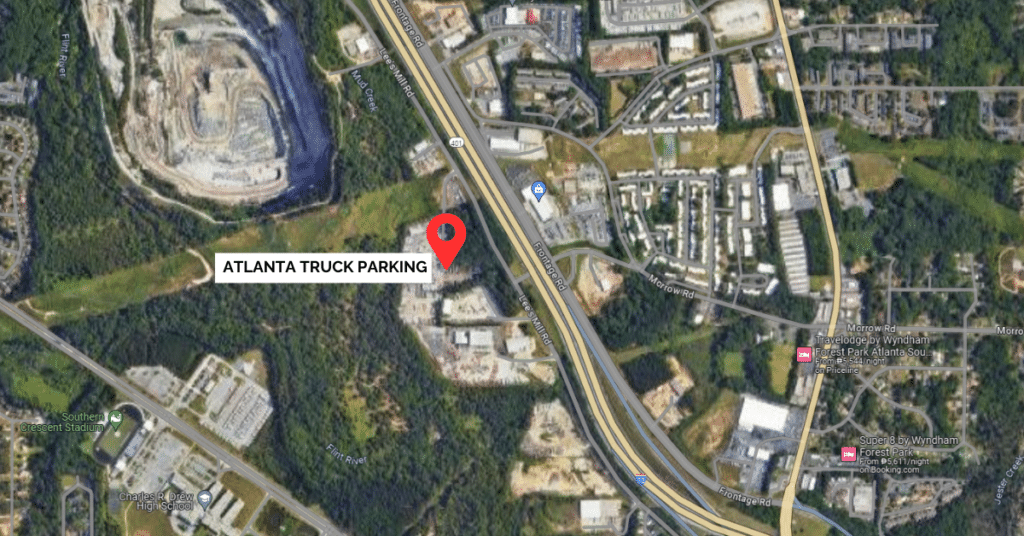
If possible, review satellite imagery or street-level mapping before arrival. This can provide useful context about entrance locations, nearby intersections, and the amount of available turning space.
Signs of a Well-Managed Truck Parking Yard
A well-managed truck parking yard is usually organized, maintained, and easy for drivers to understand.
Management quality matters because even a large parking facility can become difficult to use if parking rules are unclear or spaces are poorly organized.
Signs of a properly managed yard include:
- Clearly communicated parking instructions
- Defined parking areas
- Maintained driving surfaces
- Working gates and lighting
- Visible signage
- Accessible contact information
- Clear rules for overnight or long-term parking
Drivers should know where they are allowed to park and how to access the facility before arriving whenever possible.
For longer stays, it is also useful to understand policies concerning trailers, bobtail trucks, recreational vehicles, or other equipment. Some parking yards designate specific areas based on vehicle type.
Before choosing a yard, consider calling ahead or reviewing available information online. Confirming basic details can prevent problems after a long day on the road.
Quick Truck Parking Yard Checklist
Before parking, ask these questions:
- Is the location convenient to my route?
- Can my truck and trailer easily enter the property?
- Is there enough room to maneuver?
- Is the parking surface suitable for my vehicle?
- Does the facility have lighting and security measures?
- How is access controlled?
- Can I enter or leave when needed?
- Are parking rules clearly communicated?
A few minutes of research can make the difference between a straightforward parking experience and an avoidable problem.
Frequently Asked Questions
A truck parking yard is a designated property where commercial trucks, tractors, trailers, and sometimes other large vehicles can be parked. Depending on the facility, parking may be available for daily, overnight, monthly, or longer-term use.
Look for convenient highway access, sufficient maneuvering space, a suitable parking surface, controlled access, lighting, and security features. Drivers should also confirm operating hours, parking rules, and whether their specific vehicle type is accepted.
Yes. A truck stop typically combines parking with services such as fuel, food, showers, and convenience stores. A truck parking yard is generally more focused on providing dedicated parking or vehicle storage, although available amenities vary by location.
Some truck parking yards offer trailer-only parking or storage, but policies vary by facility. Drivers should confirm whether unattended trailers are accepted and ask about access requirements before leaving equipment.
Some facilities provide 24-hour access, while others restrict entry or require special access outside business hours. Always check the facility’s access policy before arriving, especially when planning a late-night or early-morning stop.
Conclusion
A good truck parking yard combines a convenient location, truck-friendly layout, practical access, security measures, and reliable management. Drivers should evaluate the entire parking experience rather than choosing a location based only on distance or price.
Before your next trip, take a few minutes to research parking options along your route and confirm their access requirements. If you’re looking for secure truck parking in the Atlanta area, Atlanta Truck Parking LLC offers a reliable option designed with drivers in mind. You can also explore our other resources for more tips on safe and efficient truck parking.